Best Leadpages Alternatives in 2026, Compared
Explore the best Leadpages alternatives in 2026! Discover top tools tailored for your needs, from budget options to AI-driven solutions.
Which Leadpages alternatives actually deliver in 2026?
The short answer: it depends on your bottleneck. If you need AI-driven conversion testing, Unbounce is the strongest pick. If budget is the constraint, Systeme.io or Landingi give you the most for the least. If you're deep in the HubSpot ecosystem, HubSpot Landing Pages is the obvious fit. And if you need full code ownership, Webflow stands alone.
Leadpages repositioned itself in 2026 as a conversion rate optimization platform, with pricing starting at $99/month, unlimited traffic, and AI features on every tier. That's a meaningful upgrade, but it also raises the bar for what competitors need to offer to justify switching.
Here's what separates the top alternatives at a glance:
| Tool | Best For | Key Differentiator | Pricing (starting) |
|---|---|---|---|
| Instapage | Agencies managing PPC campaigns | AdMap for ad-to-page relevance | — |
| Unbounce | High-traffic teams needing AI optimization | Smart Traffic AI, 30% avg. conversion lift | $99/mo |
| Landingi | Budget-conscious small to mid teams | A/B testing on entry paid plan | — |
| ClickFunnels | Info product sellers, multi-step funnels | Integrated checkout and upsells | — |
| Swipe Pages | Mobile-first, speed-obsessed teams | Under 1-second mobile load with AMP | — |
| GetResponse | Teams wanting email, CRM, and pages | Unified testing across email and pages | — |
| SeedProd | WordPress users needing flexible templates | Trusted by over 1 million websites | — |
| OptinMonster | Conversion form and popup focus | Exit-intent and overlay technology | — |
| HubSpot Landing Pages | B2B SaaS in the HubSpot ecosystem | Native CRM and marketing automation | Free tier |
| Brevo | Budget teams needing email plus pages | Affordable bundled marketing features | Free tier |
| Mailchimp | Small businesses starting with email | Free tier, easy to use | Free tier |
| Thrive Architect | WordPress users focused on conversions | Wide conversion-focused template library | $99/yr |
| Perspective | Agencies running high-velocity campaigns | Native CRM and messaging, no external apps | — |
| OptimizePress | WordPress users wanting funnels plus pages | Course builder and checkout included | $99/yr |
| Systeme.io | Budget entrepreneurs needing all-in-one | Free tier with 2,000 contacts | Free tier |
| Convertri | Marketers prioritizing fast page loads | Single plan, consistent high performance | $99/mo |
| Kartra | Businesses wanting full sales and marketing | Comprehensive all-in-one platform | — |
| Webflow | Teams needing code ownership | Full HTML/CSS export, no vendor lock-in | $14/mo |
| Carrd | Personal sites and minimal budgets | Low cost, free tier, one-page sites | Free tier |
| Zoho LandingPage | Zoho ecosystem users | Native Zoho CRM integration | — |
| Builder.io | Developers needing headless CMS | Custom integrations, decoupled architecture | Free tier |
| Pagemaker | Small businesses needing simple setup | User-friendly with solid basic templates | — |
| WPFunnels | WordPress funnel builders | Seamless funnel and page integration in WP | — |
| Flodesk | Creative entrepreneurs with email focus | Visual email templates plus simple pages | — |
Before you pick, ask yourself three questions:
- Do you have traffic cap concerns that will drive up costs as campaigns scale?
- Is your primary need building pages fast, or testing and optimizing them over time?
- Are you looking for a standalone page builder, or a platform that bundles email, CRM, and automation?
***
Deep dives: what each top alternative actually does
The table gives you the snapshot. Here's where the real differences show up.
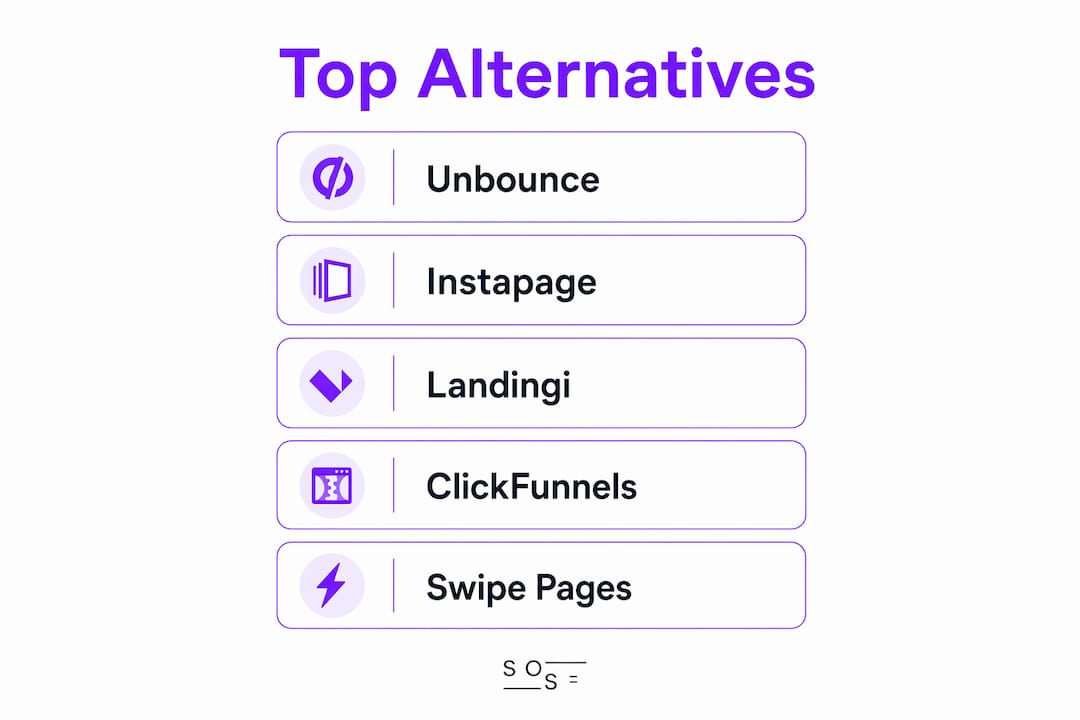
Unbounce
Unbounce is the strongest choice when conversion optimization is your primary goal. Its Smart Traffic AI routes visitors to the page variant most likely to convert based on their attributes, delivering an average 30% conversion lift over standard A/B testing. The tradeoff is traffic caps: Unbounce tiers its pricing by visitor volume, so fast-growing paid campaigns can push you into higher plan costs quickly.

The builder itself is polished and marketer-friendly, with a drag-and-drop interface that doesn't require a developer. Integrations cover Salesforce, HubSpot, Marketo, and most major email platforms. Support is responsive, and the free trial gives you 14 days to test it properly.
Instapage
Instapage targets agencies and PPC teams specifically. Its AdMap feature connects individual ads to specific landing page variants, making it straightforward to maintain message match across large campaigns. Collaboration tools let multiple team members work on pages simultaneously, which matters when you're managing client accounts at volume.

The pricing reflects that enterprise positioning. Traffic caps apply at higher tiers, so it's worth modeling your expected visitor volume before committing. Integrations with Google Ads, Facebook Ads, and major CRMs are native and well-maintained.
Landingi
Landingi punches above its price point. A/B testing is included on the entry paid plan, which most competitors reserve for higher tiers. The template library is wide, the editor is straightforward, and the platform connects with tools like Mailchimp, HubSpot, and Salesforce. G2 reviewers consistently highlight the ease of setup and the quality of customer support. For small to mid-sized teams that need core features without paying for enterprise extras, Landingi is one of the most practical choices on this list.
ClickFunnels
ClickFunnels is built for multi-step sales funnels, not single landing pages. If you sell info products, online courses, or anything with upsells and order bumps, the platform handles the full checkout flow natively. It's heavier and pricier than a standard page builder, but for funnel-centric businesses, that depth is the point. Teams that only need a single opt-in page will find it overkill.
Swipe Pages
Speed is Swipe Pages' entire identity. Built on an AMP-native framework, it delivers mobile page load times under 1 second, which matters directly for Quality Score in Google Ads and for reducing bounce rates on mobile traffic. If your campaigns run heavily on mobile and you're losing conversions to slow loads, Swipe Pages solves that problem more directly than any other tool on this list.
GetResponse
GetResponse bundles landing pages with email marketing, CRM, and automation in one subscription. The practical benefit is that you can test emails and landing pages together inside one interface, rather than stitching together separate tools. The tradeoff is that its A/B testing depth doesn't match dedicated builders like Unbounce. For teams that want consolidated tooling at a reasonable price, it's a strong fit.
SeedProd
SeedProd is the go-to for WordPress users who want flexibility without leaving their dashboard. It's trusted by over 1 million websites, covers both landing pages and full site builds, and includes a wide template library with conversion-focused layouts. The annual pricing is low relative to SaaS alternatives, making it attractive for WordPress-native teams on a budget.
OptinMonster
OptinMonster is primarily a lead capture tool, not a full landing page builder. Its strength is exit-intent popups, scroll-triggered forms, and conversion overlays. Teams that want to add high-converting opt-in forms to existing pages will find it more useful than those looking to build standalone landing pages from scratch.
HubSpot Landing Pages
For B2B teams already using HubSpot's CRM and marketing automation, the native landing page builder removes the need for any third-party integration. Forms, contacts, workflows, and analytics all connect automatically. The free tier is genuinely functional for basic use. The limitation is that the builder itself is less flexible than dedicated tools like Instapage or Unbounce.
Brevo (Sendinblue)
Brevo bundles email marketing, SMS, and landing pages at a price point that undercuts most competitors. The landing page builder is basic but functional for straightforward campaigns. Teams that need email plus pages without paying for two separate subscriptions will find it a practical, affordable option.
Mailchimp
Mailchimp's landing page feature is best understood as a complement to its email product, not a standalone builder. The free tier covers basic needs, and the editor is approachable for non-technical users. For small businesses just starting out, it's a low-friction entry point. Teams with serious conversion optimization needs will outgrow it quickly.
Thrive Architect
Thrive Architect is a WordPress plugin with a deep template library oriented toward conversions. It integrates with most major email platforms and works well for marketers who want full control over their WordPress site's design without hiring a developer. G2 reviews for similar WordPress-based builders highlight the value of in-dashboard control for non-technical users.
Perspective
Perspective is built for agencies running high-velocity campaigns that need native CRM and messaging tools baked in. The platform removes the need for external follow-up apps by handling lead capture and initial outreach in one place. Modern agencies increasingly prioritize this kind of integration to reduce tool friction and speed up campaign cycles.
OptimizePress
OptimizePress extends the standard WordPress page builder with a course builder and checkout functionality. For WordPress users who want to sell digital products without adding WooCommerce or a separate course platform, it covers a lot of ground in one plugin. G2 reviewers note the learning curve is steeper than simpler builders, but the feature depth justifies it for the right use case.
Systeme.io
Systeme.io offers a free tier with 2,000 contacts, landing pages, email automation, and course hosting. For solo entrepreneurs or early-stage businesses that need an all-in-one platform without a monthly bill, it's genuinely hard to beat. Paid plans stay affordable as you scale. The interface is functional rather than polished, but the value-to-price ratio is among the best on this list.
Convertri
Convertri focuses on page load speed and keeps its pricing simple with a single subscription plan. The builder supports fast-loading pages for marketers who run paid traffic and need consistent performance without worrying about plan tiers. It's a focused tool that does its job well without trying to be an all-in-one platform.
Kartra
Kartra packages funnels, email, video hosting, membership sites, and affiliate management into one platform. It's the most comprehensive all-in-one option on this list, which makes it powerful for businesses that want to consolidate their entire marketing stack. The complexity and price reflect that ambition, so it's best suited for teams that will actually use most of those features.
Webflow
Webflow is the only tool here that lets you export your full HTML and CSS code, meaning your pages don't disappear if you cancel your subscription. For teams that value long-term ownership and want custom designs without developer dependency, that code export capability is a genuine differentiator. Most SaaS page builders host your content on their infrastructure with no export option.
Carrd
Carrd is the simplest and cheapest option on this list. It's limited to single-page sites, but for personal brands, simple lead capture pages, or event landing pages, it covers the basics at a price that's hard to argue with. The free tier is functional, and paid plans start very low.
Zoho LandingPage
Zoho LandingPage makes sense primarily for teams already using Zoho CRM or other Zoho products. The native integration removes the need for Zapier or manual data syncing. Outside the Zoho ecosystem, there are stronger standalone options.
Builder.io
Builder.io targets developers and technical marketing teams that need a visual editor connected to a headless CMS. It supports custom integrations and works well for teams managing content across multiple platforms or frameworks. It's not the right fit for non-technical marketers looking for a simple drag-and-drop experience.
Pagemaker
Pagemaker is a straightforward landing page creator with solid basic templates and an easy setup process. It suits small businesses that need a functional page quickly without a steep learning curve. Feature depth is limited compared to the larger platforms on this list.
WPFunnels
WPFunnels is a WordPress plugin that handles both funnel building and landing page creation inside the WordPress dashboard. For WordPress users focused on lead conversion and funnel flows, it integrates cleanly with WooCommerce and major email tools. It's a practical choice for teams that want to keep everything inside WordPress.
Flodesk
Flodesk leads with visual email design and adds landing pages as a complement. For creative entrepreneurs, coaches, and small brands where email aesthetics matter, the combination of beautiful templates and simple page building is genuinely appealing. It's not built for heavy conversion testing, but for its target audience, that's rarely the priority.
***
How to choose the right tool for your marketing needs
The most common mistake is picking a tool based on feature count rather than your actual bottleneck. The right choice depends on resolving your specific constraint, whether that's build speed, testing sophistication, or stack consolidation.
Work through this checklist before you decide:
- Traffic volume: If you're running high-volume paid campaigns, check whether the platform imposes traffic caps. Unbounce and Instapage both tier by visitor volume, which can create unexpected cost jumps as campaigns scale.
- Build speed vs. optimization depth: These are different axes. Build velocity is about how fast you can publish a page from a template. Optimization depth is about AI-driven continuous testing and personalization. Most teams need one more than the other.
- Stack consolidation: If you already use HubSpot, Zoho, or GetResponse, a native integration may save more time than a best-in-class standalone builder.
- Budget: Systeme.io, Landingi, and Carrd cover a lot of ground at low price points. Instapage and Kartra are priced for teams with serious budgets and serious needs.
- WordPress dependency: If your site runs on WordPress, SeedProd, Thrive Architect, OptimizePress, or WPFunnels keep everything inside your existing setup.
- Ownership and portability: If vendor lock-in concerns you, Webflow is the only option that lets you take your code with you.
Pro Tip: Before committing to any platform, map your current conversion funnel and identify where the biggest drop-off happens. If it's at the page level, invest in optimization depth. If it's at the traffic level, prioritize speed and mobile performance. If it's at the follow-up level, prioritize integrated CRM and automation.
One trap worth naming: all-in-one platforms like Kartra and ClickFunnels are genuinely powerful, but teams that only need landing pages often pay for features they never use. Start with your actual bottleneck, not the longest feature list.
***
What actually separates landing page builders from each other
At the core, every landing page builder does the same thing: it lets you publish a page without writing code. The differences that actually matter are architectural and operational.
Hosted SaaS vs. code ownership. Most platforms host your pages on their infrastructure. Cancel your subscription and your pages go offline. Webflow is the exception, allowing full code export so you retain ownership regardless of your subscription status. For teams building long-term assets, that distinction is worth factoring into the decision.
Traffic caps and their real cost. Platforms like Unbounce and Instapage price by visitor volume. As your paid campaigns grow, you can hit a tier ceiling that forces an upgrade. Traffic caps can cause sudden cost increases or throttling, making unlimited traffic plans more financially predictable for scaling businesses. Leadpages and several alternatives offer unlimited traffic from the start.
AI and automation depth. There's a real gap between platforms that offer basic A/B testing and those with continuous AI-driven optimization. Unbounce's Smart Traffic is the clearest example of the latter, routing visitors dynamically rather than splitting them manually. Most other platforms offer split testing but leave the analysis and iteration to you.
Integration breadth. Platforms like GetResponse and Systeme.io bundle email and CRM natively, which reduces the number of tools you need to manage. Standalone builders like Instapage and Landingi rely on third-party integrations via Zapier or native connectors. Neither approach is universally better; it depends on whether you want a focused tool or a consolidated platform.
Mobile-first performance. Page speed directly affects ad Quality Scores and conversion rates on mobile traffic. Swipe Pages' AMP-native approach delivers sub-second load times by design, not as an afterthought. For campaigns where mobile is the primary channel, that architecture advantage compounds over time. You can read more about why mobile performance matters for modern marketing campaigns.
For a broader look at AI tools for startup founders and how landing page platforms fit into a modern marketing stack, the landscape in 2026 has shifted toward tools that combine speed, automation, and integration in one subscription.
***
Your website might need more than a landing page builder
If you've been comparing landing page tools and keep running into the same problem — your core website is outdated, slow, or invisible in search — a landing page builder won't fix that. It adds a page on top of a broken foundation.
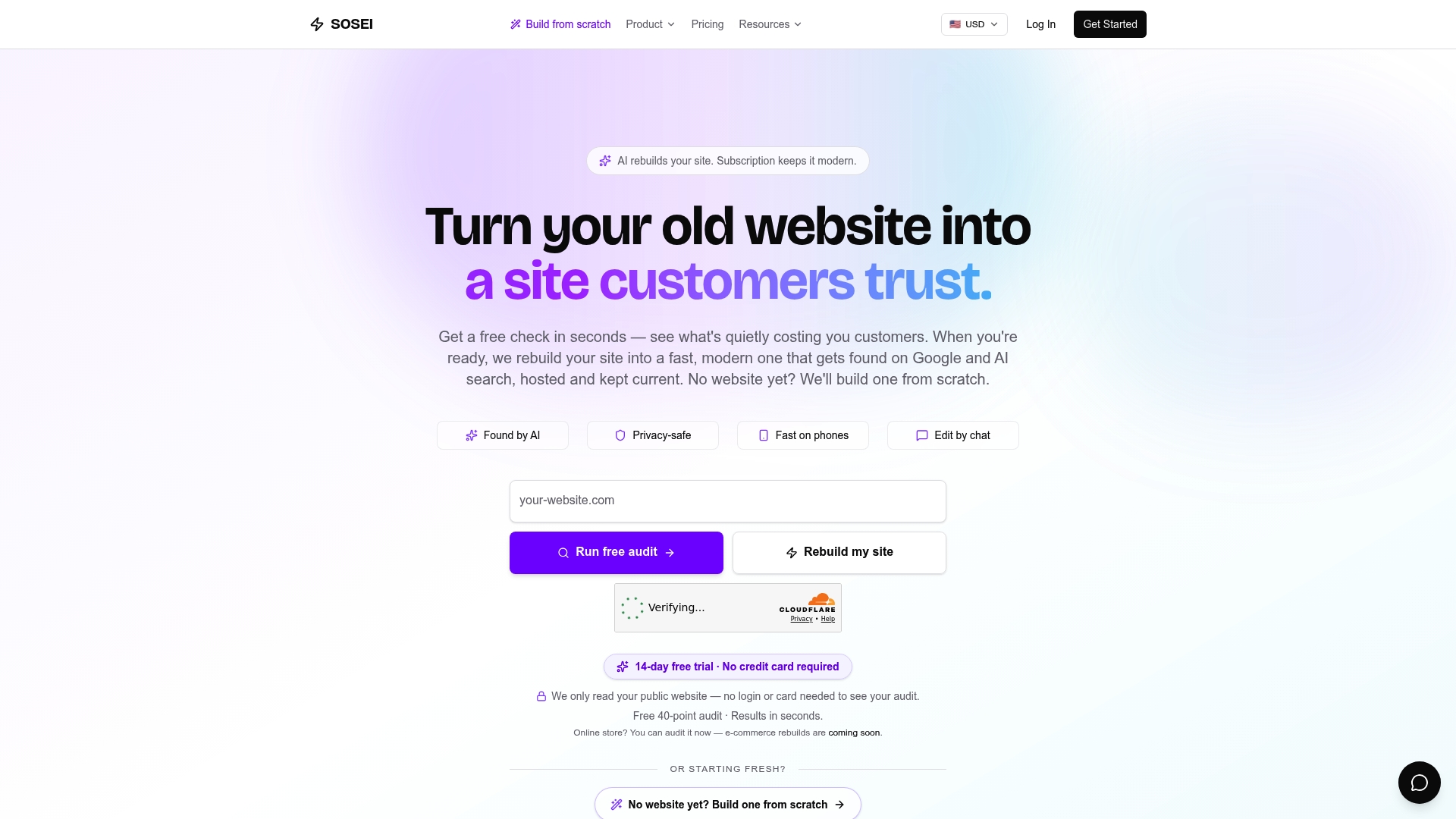
Sosei takes a different approach. Instead of adding pages to an existing site, we rebuild the whole thing: mobile-first, multi-page, optimized for Google and AI search, and built to your industry's specific needs. Every rebuild includes a free 40-point audit, WCAG 2.1 AA as the accessibility build standard, GDPR-ready legal pages, and real-time update capability. No two sites look alike because SOSEI's AI customizes each build across more than 160 industries.
The subscription model means you're not paying a one-time agency fee and then watching the site go stale. Updates, compliance changes, and performance improvements are built into the ongoing service. If you want to see what that looks like for your business, start with SOSEI here.
***
Key Takeaways
The best Leadpages alternative is the one that directly addresses your primary bottleneck, whether that's conversion testing depth, page speed, budget, or marketing stack integration.
| Point | Details |
|---|---|
| Match tool to bottleneck | Choose based on your biggest constraint: build speed, testing depth, or stack consolidation. |
| Traffic caps affect cost | Unbounce and Instapage tier by visitor volume; unlimited traffic plans are more predictable for scaling campaigns. |
| AI optimization has a real gap | Unbounce's Smart Traffic delivers an average 30% conversion lift over standard A/B testing. |
| Code ownership matters long-term | Webflow is the only platform that lets you export your full HTML/CSS code and keep it after canceling. |
| SOSEI for full-site rebuilds | When your core website needs a rebuild, not just a landing page, SOSEI's AI-driven service covers the whole foundation. |
***
The landing page builder market is changing faster than most teams realize
The conventional wisdom in this category has been to pick a builder, run some A/B tests, and iterate. That model still works, but it's becoming the floor, not the ceiling.
What's actually shifting is the consolidation of the funnel. The most effective teams in 2026 aren't managing five separate tools for pages, email, CRM, follow-up, and analytics. They're using platforms where those layers talk to each other natively. Perspective's approach of removing external follow-up apps is a symptom of that trend, not an outlier. GetResponse and Kartra have been building toward the same goal from different directions.
The vendor lock-in problem is also getting harder to ignore. Most teams don't think about it until they want to switch platforms and realize their pages, their data, and their conversion history are all trapped inside a subscription they're about to cancel. Webflow's code export capability has been available for years, but it's only recently that teams have started treating it as a serious evaluation criterion rather than a nice-to-have.
The AI optimization gap is real and widening. Platforms that offer genuine continuous optimization, not just manual split testing, are compounding their advantage over time. A page that gets smarter every week beats a page that gets tested once a quarter, regardless of how good the initial design is.
What I'd push back on is the assumption that more features always mean better results. The teams I see getting the most out of these tools are the ones who picked a platform that matched their actual workflow and used it deeply, rather than the ones who bought the most comprehensive platform and used 20% of it. The re-do treadmill is real in landing page tools too: switching platforms every 18 months because the current one "doesn't do everything" is usually a sign that the bottleneck was never the tool.
The forward-looking question isn't which builder has the best feature list today. It's which platform is building toward the kind of integrated, AI-driven, mobile-first experience that converts traffic into customers without requiring a full-time optimization team to run it.